
Turned Brass Spacer
A turned spacer concept for locating and separating assembly components.
Explore details
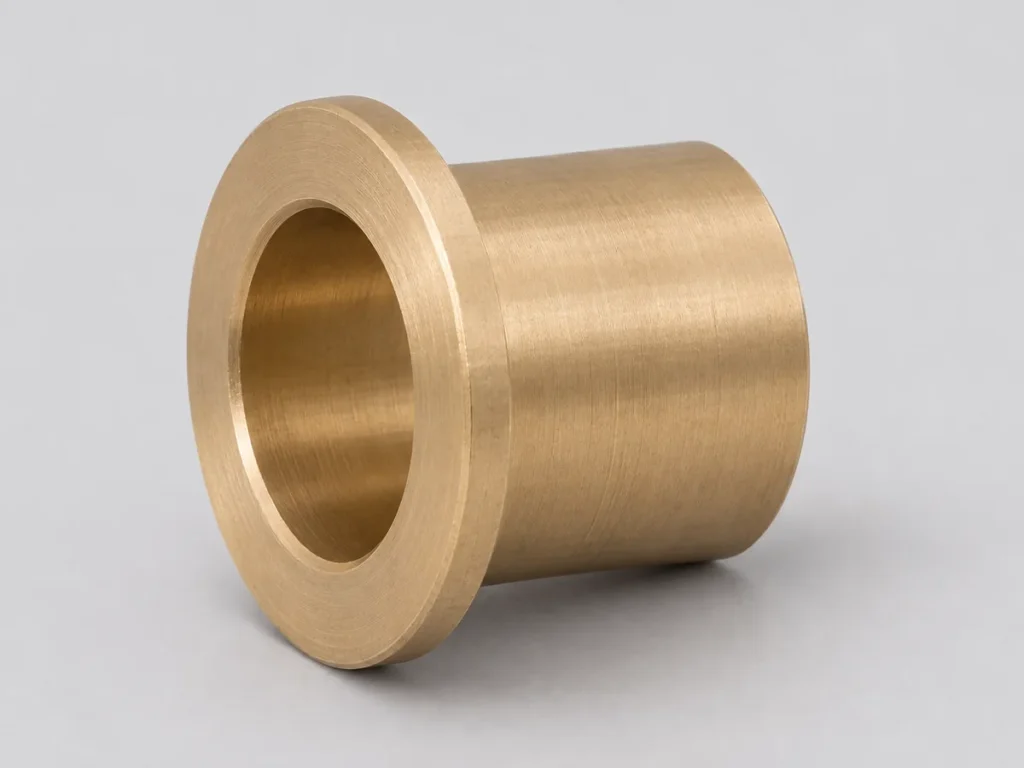
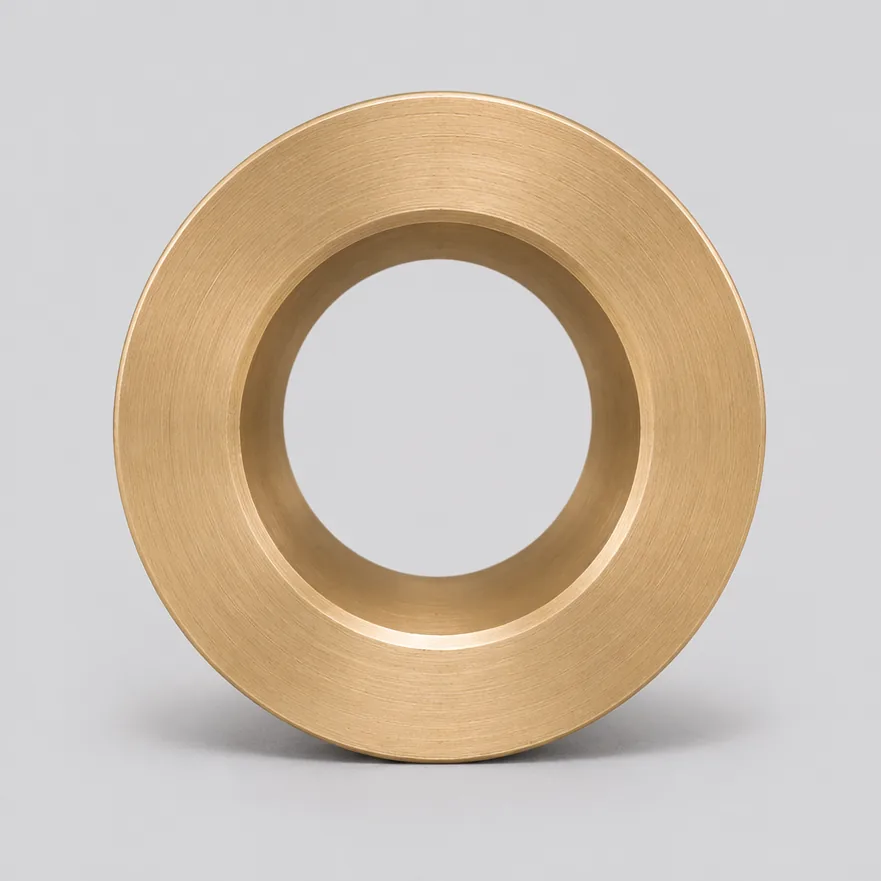
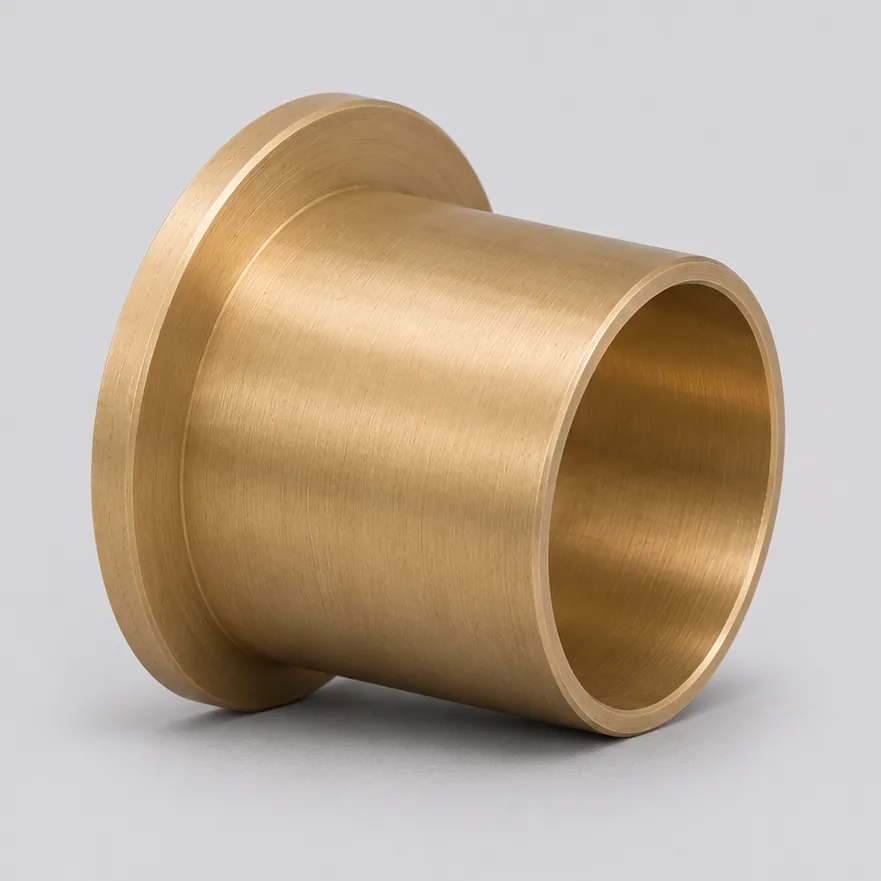
A drawing-defined turned sleeve with an integral flange, for shaft support, axial positioning or a replaceable wear interface.
| Bore and outside diameter | Supply nominal sizes and fit requirements |
|---|---|
| Overall and bearing length | Specify separately on the drawing |
| Flange dimensions | Specify diameter, thickness and required face condition |
| Bronze grade | State alloy and operating environment |
Provide a section view with the shaft and housing dimensions. Mark whether the bore is measured before or after installation and specify the critical surfaces, fits and datums.
Describe motion, duty cycle and the lubrication plan. If the application requires an oil groove, chamfer or another feature, include it in the drawing and review the fit on a representative sample.
Product image is a concept illustration. Confirm the final specification and availability in your quotation.
| Bore and outside diameter | Supply nominal sizes and fit requirements |
|---|---|
| Overall and bearing length | Specify separately on the drawing |
| Flange dimensions | Specify diameter, thickness and required face condition |
| Bronze grade | State alloy and operating environment |
| Critical features | Identify surface roughness, datums and inspection requirements |
It provides a shoulder for axial positioning. If the flange must carry thrust, specify the loading and running conditions so that application can be reviewed.
Provide shaft size and tolerances, the housing fit and the required clearance in the assembled condition. A press fit can affect the bore after installation.
No. State whether you need a particular alloy, an oil-impregnated construction or a separate lubrication method. Confirm the required material and operating conditions in the specification.
Start with bore, outside diameter, flange thickness and length. Add concentricity, face runout or surface roughness where those requirements affect assembly or performance.
A turned spacer concept for locating and separating assembly components.
Explore detailsA flange concept with a central bore and a bolted mounting interface.
Explore detailsA drawing-defined mounting concept with pockets, bores and fastening features.
Explore detailsA housing concept with an internal cavity and mounting features.
Explore details

