Choosing aluminum for a bracket or enclosure begins with the finished part, not the alloy number on a quotation. A folded cover and a machined mounting block may both be aluminum, yet ask very different things of the material and manufacturing route.
The useful purchasing question is: which specified alloy, temper and product form fit this design? This guide compares two common starting points and shows how to keep the choice clear through sampling and production.
Use the alloy and temper together
5052-H32 is commonly considered for formed sheet-metal parts, while 6061-T6 is often considered for machined and structural components. The temper is part of that comparison: it describes a material condition, so “5052” and “6061” alone are incomplete purchasing descriptions. SendCutSend’s alloy comparison discusses these material families and the differences in forming, strength and fabrication. See the alloy reference.
| Part requirement | Question to resolve |
|---|---|
| Several bends in a thin enclosure | Which alloy and temper suit the proposed bend geometry? |
| Machined mounting faces and pockets | Which stock form and machining route fit the drawing? |
| Welded construction | How will the final condition and acceptance requirements be specified? |
| Visible decorative surfaces | What finish sample and appearance limits will be approved? |
| Connection to other components | Which interfaces control fit, loads and environmental exposure? |
Start with a formed-part or machined-part decision
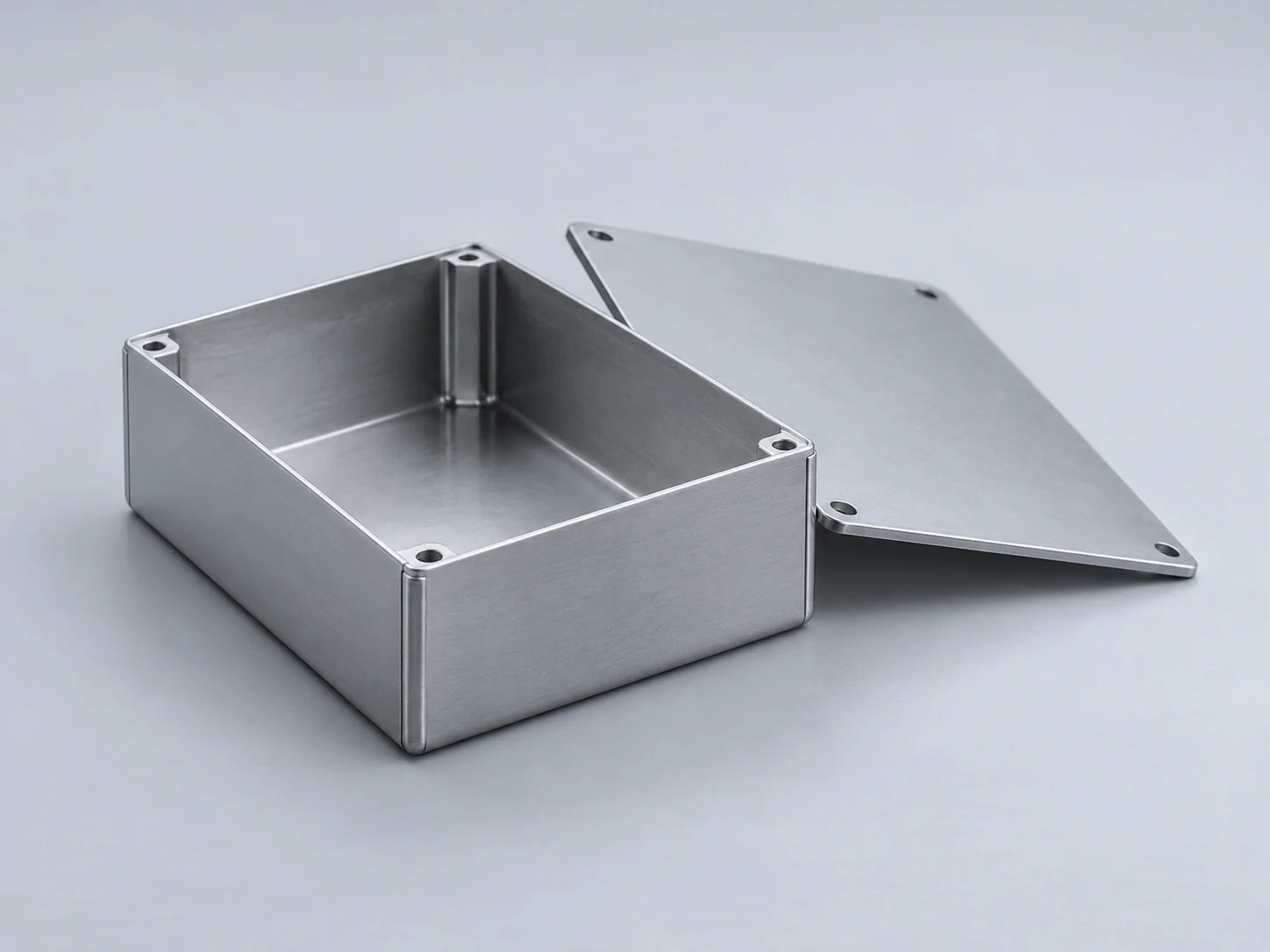
For an enclosure, supply the formed geometry, sheet thickness, mounting details and cover relationship. Mark the faces that matter in the finished assembly. Ask the fabricator to review the bend sequence and any fastener installation before treating the flat pattern as final.
For a machined bracket, distinguish functional mounting faces from non-critical outside surfaces. State the datum scheme and the interfaces that must align with the mating part. A request for an unnecessarily tight tolerance on every surface makes it harder to identify what the assembly actually needs.
There is no reason to force both parts into the same stock specification simply because they belong to one machine. Keep each line item tied to its own drawing, material condition and inspection requirements. If a supplier proposes a shared material to simplify purchasing, request that proposal as a clearly identified alternative.
Separate functional acceptance from appearance
Prepare two approval lists. The first covers function: dimensions, assembly fit and any application-specific testing defined by your engineering team. The second covers appearance: visible faces, texture, colour reference and permitted handling marks. Name the surfaces on the drawing so the two lists do not conflict.
Before ordering a finish, ask how the specified alloy and manufacturing route affect the result. Agree where masking is required and whether dimensions are accepted before or after finishing. A photograph can help with discussion, but an approved physical sample is more useful when appearance is important.
Build a quotation package that permits a meaningful comparison
- Provide one current model and dimensioned drawing for each part.
- State the alloy, temper, stock form and thickness where controlled.
- Identify the assembled condition and any mating components.
- List the finish and surface-specific requirements.
- Give sample quantities, production quantities and delivery destination.
- Ask suppliers to list exceptions or proposed material substitutions separately.
Consider a hypothetical control-box project: a bent cover and a thick machined mounting plate are two separate buying decisions. The cover review should focus on formed fit and appearance; the plate review should focus on the mounting interfaces. This is a purchasing example, not a released material specification.
Use our materials directory to organise your options and the sheet metal parts collection to identify the part family. Send your drawings for review with any mandatory material requirements clearly marked.
Frequently asked questions
Is 6061 always better than 5052?
No single alloy is better for every part. Review the specified temper, geometry, manufacturing route and service requirements. A stronger material condition does not automatically make it the best choice for a tightly formed enclosure.
Can the supplier change the alloy during production?
A material substitution should be reviewed and approved before it is used. Record the proposed alloy and temper, the reason for the change, and any effect on the drawing, finish or qualification requirements.
Can I order a prototype before choosing the production material?
Yes, but identify what the prototype is intended to prove. A geometry-only sample made from an alternative material does not approve the final material, finish or production process. Keep these approval stages distinct.
What should a material document identify?
Specify the document you need and its connection to the supplied material or lot. Include the grade and condition that must be verified. Confirm document availability during quotation rather than assuming it is included automatically.